A Name That Survives in Fragments
Lavinia Lang belongs to a rare category of public figure: someone whose presence can be traced, but never fully possessed. Her name appears in vintage screen credits, in family references, and in the careful margins of film history. Yet the shape of her life is not built from spectacle. It is built from intervals, from brief appearances that left a trace, then from years of deliberate privacy. That contrast gives her story its unusual texture. She is visible enough to be remembered, but elusive enough to invite reflection.
There is something almost cinematic about that kind of life. A figure steps into the frame, speaks a line or two, and then exits while the scene continues around her. The camera does not always follow. Years later, the audience still leans forward, trying to catch what happened between the cuts. Lavinia Lang invites that sort of attention. Her story is not loud. It is layered.
Screen Work in a Changing Era
The mid 1960s and late 1960s were restless years for British screen culture. Television was expanding, film was changing tone, and audiences were becoming more receptive to stories that felt sharper, more contemporary, more socially alert. Lavinia Lang’s known credits place her inside that shifting landscape. Her appearance in The Newcomers in 1965 linked her to a world of serialized storytelling, where domestic life, ambition, and social change often played against each other like instruments in the same score.
By 1969, her association with The Prime of Miss Jean Brodie placed her near a production that carried a distinct cultural afterglow. That title alone still echoes because it belongs to a period when character, atmosphere, and moral tension mattered as much as plot. A credit like that does not need to be large to matter. Sometimes a small role inside a memorable work can feel like a bright thread woven into a larger cloth. Viewers may not remember every performer, but they remember the texture.
What stands out about Lavinia Lang is not a crowded filmography. It is the opposite. The record suggests select appearances rather than a relentless career climb. That has its own elegance. Not every acting life follows the same arc. Some careers are like long rivers. Others are like a series of polished stones laid carefully across a stream. Her known work belongs to the second kind.
The Power of a Sparse Public Record
Modern culture often assumes that visibility proves value. Lavinia Lang pushes against that idea simply by existing in the public record without surrendering herself to it. There is no flood of interviews, no loud self-mythologizing, no relentless public reinvention. Instead, there is a sparse trail. A few credits. A marriage. Two children. A life that seems to have chosen quiet over constant exposure.
That quiet can be misleading to people who expect public figures to perform their own significance. In reality, silence can be a form of clarity. It can mark boundaries. It can protect ordinary life from becoming a spectacle. In Lang’s case, the lack of constant publicity does not erase her. It sharpens the outline. The gaps become part of the portrait. They give the name a kind of negative space, like a face drawn by the light around it rather than by the features themselves.
This is one reason her story continues to attract attention. It resists the easy, overworked habits of celebrity culture. There are no obvious excesses to dissect, no tabloid drama to inflate. What remains is a cleaner shape: an actress with documented screen work, a later family life, and a public profile that stayed low by choice or by temperament.
Family as the Strongest Public Thread
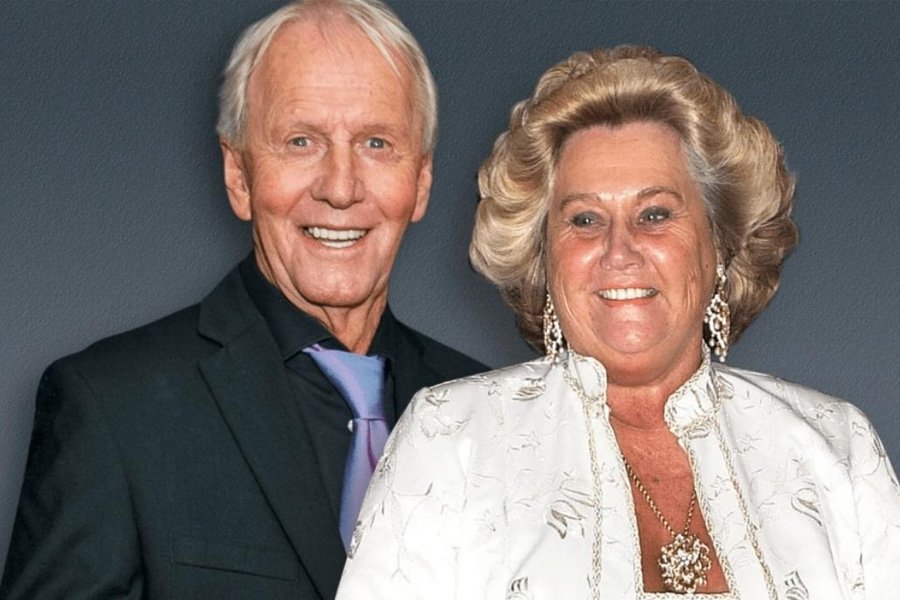
For many people, the second half of life becomes more important than the first. In Lavinia Lang’s case, family appears to be the most stable public thread connecting her to the wider world. Her marriage to Brett Hudson in 1992 marks a clear point in the record. Hudson brought his own history, first through music and later through work behind the camera. Together, they formed a family that remained largely outside the churn of celebrity attention.
Their children, Jonathan Brett Hudson and Tess Hudson, appear in family references with the kind of consistency that usually belongs to people who have chosen ordinary privacy over public display. That matters. A family can be well known in one generation and nearly invisible in the next, not because it lacks importance but because it values a life that is not arranged for public consumption. In that sense, the Hudson Lang household feels almost old fashioned. It keeps its furniture out of the spotlight.
There is dignity in that arrangement. The public often confuses information with intimacy, as though knowing a few details means knowing the person. Lavinia Lang’s life suggests the opposite. A few dependable facts can coexist with a much larger private world. The known details are only the doorframe, not the room.
Why Her Name Still Carries Weight
Names linger for different reasons. Some survive because of fame that never fades. Others remain because they are attached to a moment, a relationship, or a work that continues to be watched. Lavinia Lang’s name survives through a combination of those forces. Her screen credits still circulate in the memory of film and television history. Her marriage connects her to another public figure. Her children anchor her in family biography. Taken together, these threads give her name persistence without turning it into a brand.
That kind of persistence is subtle. It is more like the trace of perfume in a hallway than a trumpet blast. The scent remains after the person has moved on. The same is true of certain performers whose work is brief but memorable. They leave behind atmosphere. They leave behind resonance. Lavinia Lang seems to exist in that register.
There is also an appeal in the fact that not everything is known. In a culture addicted to total disclosure, incompleteness can feel almost luxurious. It forces attention to stay with the verified rather than the imagined. With Lavinia Lang, the known facts are enough to sketch a life, but not enough to turn her into a neatly packaged legend. That gives the story integrity.
Reading Her Legacy Through the Negative Space
A legacy does not have to be grand to be real. In some cases, it is measured by the pressure of what is absent. Lavinia Lang did not build a sprawling public empire around her name. She did not saturate the media landscape. She did not turn herself into a recurring spectacle. Instead, her presence is modest and precise. A few screen appearances. A family life that appears steady. A biography that preserves privacy as part of its character.
That restraint can be interpreted as a kind of aesthetic, even if it was never intended that way. The most interesting portraits are often the ones that leave room for the viewer to breathe. Too much detail can flatten a subject. Too little can make it vanish. Lavinia Lang sits in the middle, where the image stays legible but never overexposed.
Her story also reflects a larger truth about mid century performers, especially women whose careers were not always archived with equal care. Many worked, contributed, and moved on without the machinery of myth attached to them. Their lives were not less full because they were less public. Sometimes the opposite is true. The quieter the life, the more it may have belonged to itself.
The Lasting Appeal of a Low-Glow Life
There is a modern temptation to believe that only the loudly documented are worth remembering. Lavinia Lang disproves that in her own modest way. She remains interesting because her life has texture without clutter. She is not a blank slate. She is a figure drawn in fine lines. Her name carries the grain of old television, the sheen of late sixties cinema, the steadiness of family life, and the calm discipline of someone who did not chase the spotlight once it moved elsewhere.
That is a rare kind of endurance. It is not built on volume. It is built on continuity. A role from one era, a marriage from another, children who carry the family line forward, and a public identity that never became too swollen to recognize. Lavinia Lang remains memorable precisely because she never turned her life into a performance for the ages.
When Your Pet Turns Dinner Into A Detective Mystery
How Contractors Become The First Call In Their Service Area
Building A Better Contract For Complex Construction Projects
Designing Industrial Spaces That Work As Hard As Your Equipment