A House Built on Ordinary Days
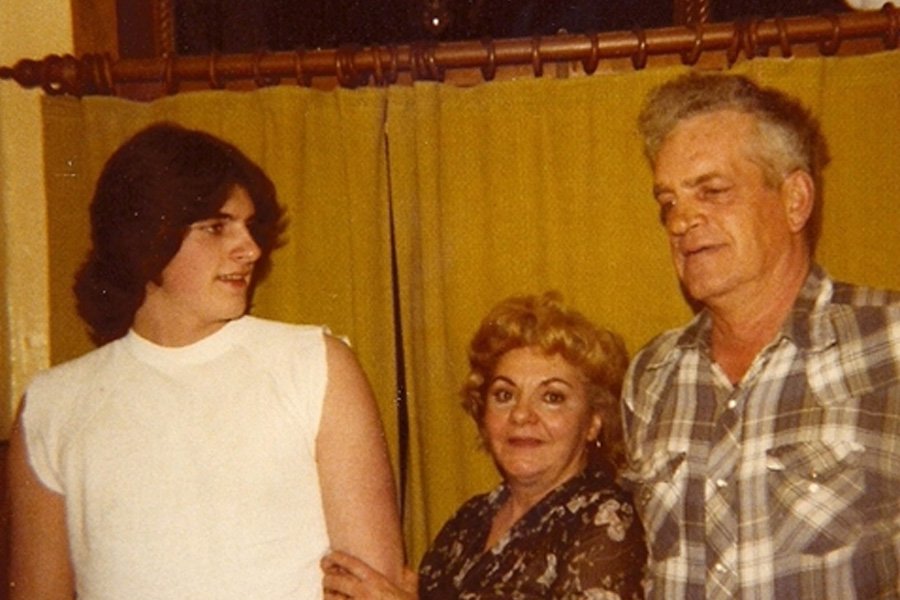
I was born into a city that never seemed to sleep, yet my earliest memories were made in the soft, repeated rhythms of home. Annette C Pallon Ratajczyk is the name attached to a life that was not famous in the usual sense, but it was sturdy, long, and full of purpose. I came up in Brooklyn at a time when a woman’s world was often measured by the condition of her kitchen table, the steadiness of her children, and the way she carried a burden without making a song and dance of it. That was my weather. That was my inheritance.
My life was shaped by immigrant blood and neighborhood gravity. Scottish, Irish, Norwegian, and Icelandic roots gave me a mixed inheritance, like threads in a blanket stitched by many hands. I did not grow up surrounded by luxury. I grew up surrounded by effort. In those days, effort was a kind of currency. It bought respect. It bought safety. It bought a future for children who would otherwise have little more than dreams and the determination in their bones.
Brooklyn was not just a place on the map. It was a living thing, loud and crowded and alive with possibility. The stoops, the corner stores, the church basements, the summer streets, the winter coats brushed with snow, all of it formed the background music of my life. I learned early that a family can be a harbor in a rough sea. I carried that lesson forward with both hands.
Marriage, Motherhood, and the Work That Does Not Make Headlines
When I married Peter Paul Ratajczyk, I entered a partnership that was built less like a palace and more like a bridge. It had to hold weight. It had to be practical. It had to carry a family through ordinary hard times and the occasional storm. We did not have a life of polished edges. We had a life of use. That mattered more.
I became a mother in the middle of a century that expected women to do much and say little. I took that burden and turned it into a craft. The house had to function, but it also had to breathe. There were meals to stretch, clothes to mend, voices to calm, fevers to watch, school papers to sign, and a hundred tiny decisions no one sees from the outside. A family is often held together by invisible stitches. I knew every one of them.
People sometimes look for drama in a life, but the real drama was in the repetition. It was in getting up, keeping the lights on, making sure everyone had a place at the table, and finding warmth where there was not much to spare. My children did not just grow inside a home. They grew inside a system of habits, values, and small acts of care. That was my hidden engineering.
A Family That Grew Like a Tree with Many Branches
My children each carried a different spark. Annette, Barbara, Patricia, Pamela, Kathleen, and Peter Thomas came into the world in different years, and each arrival changed the shape of the household. No two children are ever made of the same weather. One may be calm, another restless, another curious, another fierce. A mother learns to read those currents the way a sailor reads the sky.
Annette brought leadership and a strong center. Barbara added her own steady presence. Patricia carried a deep family loyalty. Pamela gave the home another layer of sisterhood and shared memory. Kathleen, the youngest daughter, rounded out the circle with her own place in the family’s rhythm. Then Peter arrived, the only son, and with him came a different kind of energy entirely, bright and unruly like a flame on a windy night.
There were also the siblings I came from, the people who knew my earliest self before marriage and motherhood shaped the rest. Victoria, Helen, Patricia, RoseMary, Thomas, and Louis were part of the foundation beneath my feet. Families like ours were not built from single heroic moments. They were built from many shared rooms, many borrowed cups of coffee, many holidays, many arguments made and forgiven, many years of showing up.
Extended kin helped make the household wider than its walls. In-laws, cousins, nieces, nephews, and neighbors folded into the family orbit. On holidays, the room could fill like a tide rolling in. The laughter came in waves. The food disappeared fast. The children ran like sparks between chairs. That kind of gathering is more than a meal. It is a living archive.
The Home as My True Profession
I never needed a public title to understand the value of my work. My profession was homemaking, though the word can sound too small for what it really meant. I was a manager of time, energy, emotion, and resources. I was part nurse, part cook, part counselor, part referee, part memory keeper. The title did not appear on a paycheck, but it carried real power.
The house had to do many jobs at once. It had to shelter, instruct, feed, comfort, and prepare. I learned to do all of that without making noise about it. That was the style of my era, and in some ways it was a kind of dignity. Not every life needs a stage. Some lives are more like foundations. They are hidden under the visible structure, but without them everything falls apart.
I understood money as a tool, not a trophy. We lived by practical means. That meant stretching what we had and finding enough in careful planning. A well-run household is a kind of garden. If you tend it well, even simple soil can produce something lasting. I planted habits, not headlines. I watered discipline, not vanity. I pruned what was wasteful and protected what was tender.
When a Son Becomes a Voice for the Family
Peter Thomas Ratajczyk, later known to the world as Peter Steele, brought another dimension to our family story. He carried my attention, my stubbornness, my humor, and a fierce emotional intelligence that found its outlet in music. Some children inherit a room. Some inherit a temperament. Peter inherited both. He could fill a space with presence the way thunder fills a summer sky.
His life went in a direction I could not have predicted when he was a child. Music became his way of making sense of the world, and through him, our family entered a wider public imagination. That was never the plan, but life often paints with a brush more dramatic than our own. He remained my son before he became anything else. Fame may alter the view from the outside, but it does not change the private language of mother and child.
The song dedicated to me carried a tenderness that still reaches people I will never meet. It is strange and moving to know that a family relationship can travel through art, crossing years and boundaries like light passing through a window. I was not a performer, but I became part of a performance that lives on in memory. That is one of the great surprises of family life. What you teach at the table can echo on a stage.
How Memory Grows After a Life Ends
A person may leave the earth, but memory keeps walking. After my death in Brooklyn in 2005, my name did not vanish into silence. It lived on in stories, family recollections, fan conversations, and the kind of remembrance that gathers around people connected to music and family devotion. I find something fitting in that. A mother’s work often extends beyond her own sight line. It ripples outward long after she is gone.
People often remember the visible things first, the dates, the locations, the burial site, the famous son. But what lasts just as strongly is the feeling of a home. The smell of food cooking. The sound of too many people in one room. The comfort of knowing someone had you covered. The pressure of living under a strict but loving eye. The pride in being part of something bigger than yourself. That is how memory behaves. It is less a photograph than a fire passed from hand to hand.
My story is not one of glamour. It is one of endurance. It is a story of a Brooklyn woman who kept the center of the wheel turning while the spokes changed shape around her. I was a witness to decades of change, from neighborhood life to digital remembrance, from block parties to online tributes. Yet the core remained the same. Family first. Home first. Faith first. Love first. Everything else followed.
FAQ
What kind of life did I build in Brooklyn?
I built a life rooted in family, faith, and steady labor. Brooklyn gave me the setting, but the home gave me the meaning. I learned to turn ordinary days into something durable and warm.
Why does my family remember me so strongly?
They remember me because I was the center of the household. I kept the rhythm of daily life moving, protected the children, and helped create the kind of family closeness that survives long after childhood ends.
What made my role as a mother important?
My role mattered because motherhood was not passive in my world. It was work, discipline, patience, and vision. I helped create the conditions that allowed my children to become themselves.
How did Peter Steele’s life change the way people know me?
Peter’s music brought my name into a wider public space. Through him, people came to know me not only as a mother in Brooklyn, but as part of the emotional story behind a musician’s life and work.
What remains the most lasting part of my legacy?
The most lasting part is the family structure I helped build. My legacy lives in the bonds between children, grandchildren, and the stories they still tell about a home that held them together.
Building A Backlink Reputation That Search Engines Trust
Keeping Your Yard Safe When Trees Start Acting Suspicious
Turning Your Yard Into A Place Wildlife Would Rather Avoid