A name that appears, then slips back into shadow
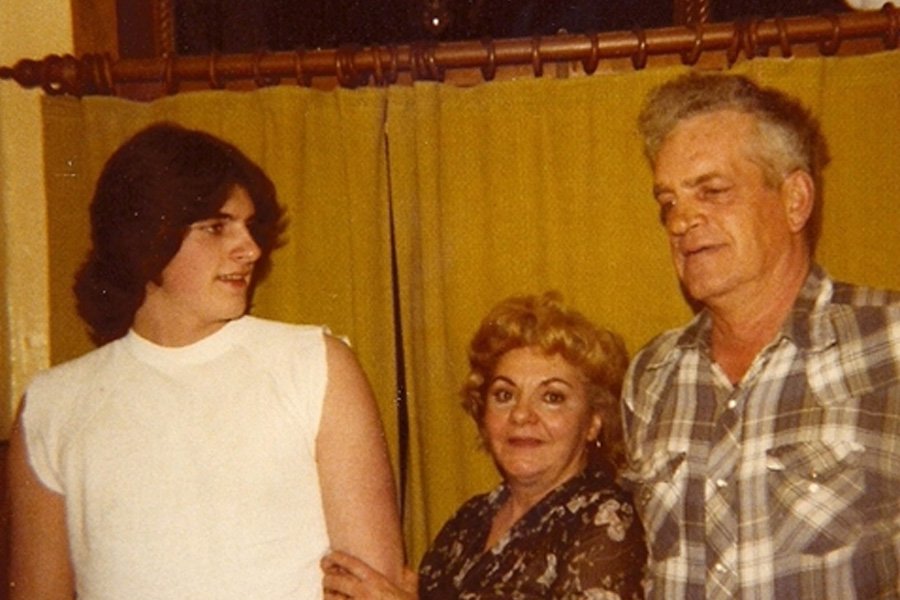
I keep coming back to Dylan John Burke because his public footprint feels almost intentionally light. In a world that rewards constant self-display, he stands at the edge of the frame like a figure in soft focus. His name is recognizable because it is connected to a family with a long artistic history, yet the story around him is marked less by performance than by restraint. That contrast gives his life an unusual texture. He is present enough to be noticed, but private enough to resist being flattened into a simple celebrity narrative.
The article above sketches the outlines clearly: Dylan John Burke was born into a family with deep Chicago roots, strong ties to film and theater, and a public identity shaped by both creativity and care. What interests me most is not just who his relatives are, but how that inheritance seems to have been handled. Some families treat fame like a spotlight they cannot escape. Others treat it like weather, something to be navigated rather than announced. Dylan appears to belong to the second group.
Family as legacy, family as pressure
A family name can be a gift, a burden, or both at once. In Dylan John Burke’s case, the surname sits inside a larger artistic constellation. Joan Cusack’s career, her siblings’ work, and the wider Cusack family presence in film and television form a kind of cultural backdrop that is hard to ignore. It is as if he was born into a house where the walls themselves remembered scenes, scripts, and applause.
Yet that kind of environment does not always create a public life. Sometimes it creates the opposite. When a child grows up around professional visibility, privacy can become a learned skill. That is the impression Dylan gives. He is tied to a family that has spent decades in public view, but his own path seems to have been built with a different material. Less glass, more wood. Less glare, more grain.
There is something human in that. Not every member of a famous family wants to become a face. Some prefer to be a person first.
The rare public appearances that matter
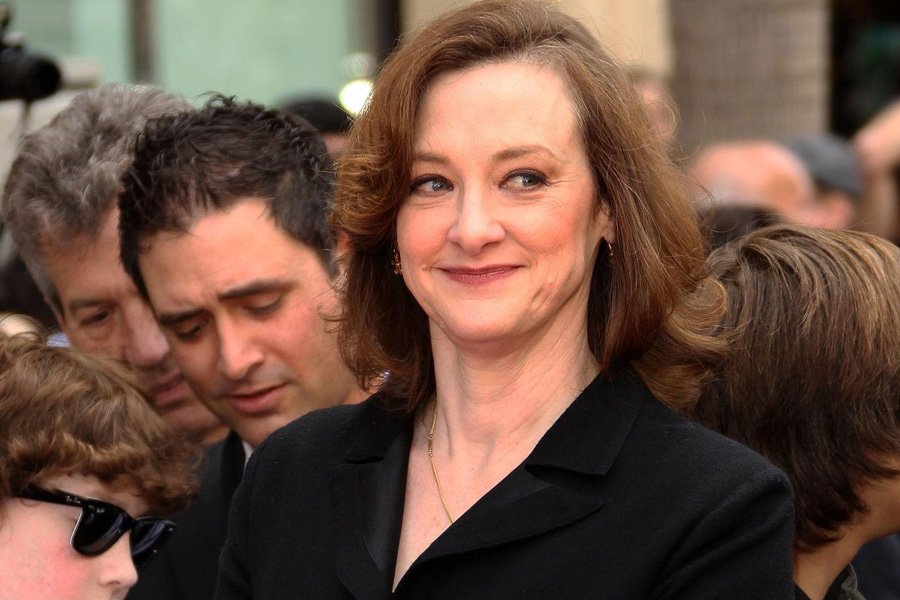
The most telling parts of Dylan John Burke’s story are not dramatic. They are brief, family-centered appearances at events that belonged to Joan Cusack’s professional life. These moments matter precisely because they are so limited. A red carpet photo can look like a small thing, but in the life of a private person it functions almost like a postcard. It says, I was there, and then it is gone.
That pattern creates an important boundary. Dylan is visible in relation to family milestones, not through a public career of his own. The distinction is important. It prevents the easy mistake of assuming that anyone near the entertainment industry must also be building a public brand. In Dylan’s case, the opposite appears true. The family history is public. His personal life is not.
I find that separation revealing. It suggests intention. It suggests a decision to let moments speak briefly and then disappear. In an age where every image is expected to become content, that kind of silence has shape.
The father’s business path and what it adds to the picture
One newer angle that broadens the story is the business background of Dylan’s father, Richard Burke. That detail matters because it reminds me that Dylan’s world is not only artistic. It is also practical, professional, and rooted in a different kind of discipline. The father’s career trajectory, including a transition into an advisory role, adds another layer to the family portrait. It shows a household shaped not just by performance, but by management, leadership, and long-term institutional work.
That blend is often overlooked. We tend to imagine celebrity families as entirely theatrical, as if everyone in the house is always rehearsing for a camera. But real families are more mixed than that. They contain business meetings and school runs, contracts and dinners, public premieres and private conversations. Dylan seems to exist in that mixed reality, where the artistic halo around the family never fully replaces ordinary life.
This matters because it helps explain the tone of the public record. Dylan does not appear to have been pushed into a visible identity machine. Instead, the family seems to have allowed space for a quieter form of adulthood. That is a kind of wealth too. Not financial wealth, necessarily, but social breathing room.
What absence can tell us
I think one of the most interesting features of Dylan John Burke’s profile is what is missing. There are no obvious acting credits attached to his name. There is no flood of interviews, no public-facing career narrative, no widely visible social media identity that turns him into a product. At first glance, absence can look like emptiness. But that is too simple. In a case like this, absence becomes a signal.
It tells me the public record is being managed carefully. It tells me the family values a line between recognition and exposure. It tells me that not every life connected to entertainment has to become entertainment itself. That silence is not a blank page. It is a deliberate margin.
I also think this changes how I read the few public moments that do exist. A family appearance is no longer just a photo opportunity. It becomes a rare interval in an otherwise closed narrative. Those rare glimpses are what give Dylan’s story its shape. Without them, the outline would be even thinner. With them, the outline stays intact without becoming intrusive.
The wider Cusack circle and the weight of association
Another layer worth noting is the larger Cusack family web. John Cusack, Ann Cusack, Bill Cusack, and Susie Cusack all extend the family’s public identity into different corners of film and television. This creates a kind of echo chamber of recognition. Even when Dylan is not the subject of attention, the name itself carries history.
That history can be useful, but it can also create a strange kind of shadow. People often mistake association for biography. They see a surname and assume a career. They see a family photo and assume a story is already complete. Dylan John Burke resists that shortcut. He remains more suggestion than explanation. That makes him interesting in a way that is almost literary. He is not a headline. He is a margin note beside a much larger text.
And yet the margin note matters. It reminds me that public families are still families. They age, shift, split, gather, and rearrange. Children become adults. Careers rise and recede. Old photos become markers. New details arrive slowly, if at all. The result is not a straight line but a braided one.
Why the name still draws attention
Dylan John Burke attracts attention because the public wants closure where there is none. People are curious about celebrity children, especially when the family history is rich and the subject is scarce. We want a neat map. We want a career, a public persona, a visible path. But Dylan’s story refuses to become tidy.
That refusal is part of the appeal. It leaves room for interpretation without surrendering privacy. It allows me to notice the family connections, the occasional public appearances, the business context, and the absence of a loud personal brand. All of that together creates a portrait with soft edges and a strong center.
FAQ
Is Dylan John Burke a public figure?
He is connected to a well-known family, but his own public profile is limited. He appears in family-related moments rather than as a standalone public personality.
What makes Dylan John Burke notable?
He is notable because of his family background, his rare public appearances, and the contrast between a famous lineage and a private personal life.
Does Dylan John Burke have a public career?
There is no widely visible public career attached to his name in the material above. His presence is described mainly through family and event appearances.
Who are his immediate family members?
His mother is Joan Cusack, his father is Richard Burke, and his brother is Miles Burke.
How does the extended family affect his story?
The extended Cusack family adds depth to his background. It places him within a larger artistic tradition while also making his privacy more striking.
Why do people talk about his appearances at film events?
Those appearances are rare and therefore memorable. They show him in a family context during major professional moments in Joan Cusack’s career.
Is there much known about his personal life?
Very little is publicly documented. That limited visibility is part of what defines his profile.
Why does Dylan John Burke’s story stand out?
It stands out because it resists the usual celebrity narrative. The story is not built on self-promotion. It is built on distance, family, and quiet continuity.
Finding The Best Daycare Experience For Every Dog Size
How To Turn A Boring Sale Into A Video People Actually Watch
What Happens Behind The Scenes In A Columbus Drunk Driving Case