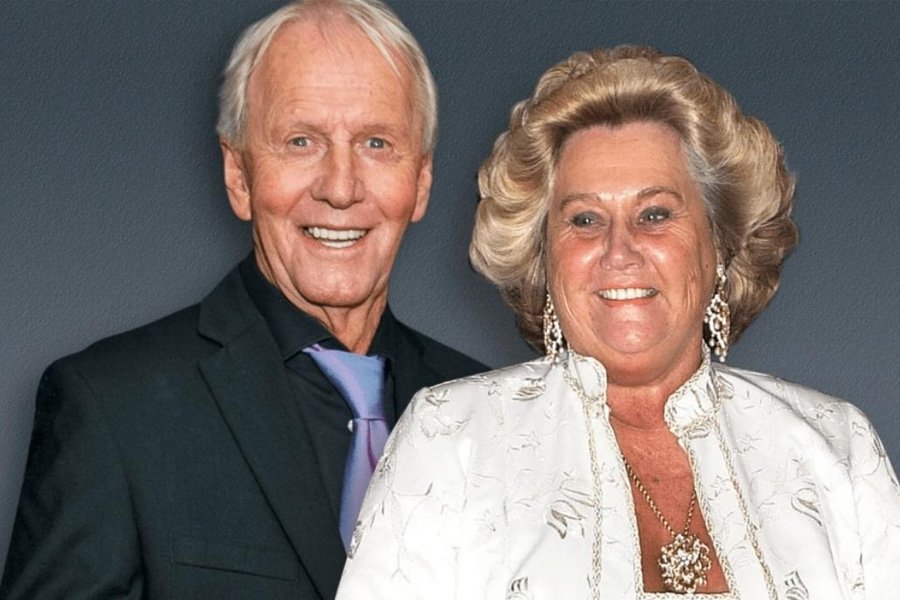
A Life Defined by Privacy, Not Performance
Noelene Edwards is often introduced through the glare of someone else’s spotlight, but that framing is too small for the shape of her story. She stands in the public imagination as the first wife of Paul Hogan and the mother of his five children, yet that description only sketches the outline. The fuller picture is more interesting. It is a portrait of a woman whose life moved alongside fame without being swallowed by it, a woman who seems to have treated privacy not as absence, but as a kind of shelter.
That choice matters. In an age that rewards oversharing and turns family histories into content, Noelene Edwards represents a different rhythm. She belongs to the long tradition of people who built a home, raised children, and absorbed the shocks of changing fortune without turning every chapter into a performance. Her name surfaces because the family became famous, but her own significance rests in steadiness. That kind of influence is often invisible at first glance, like roots beneath hard ground.
Marriage Before the Spotlight
When Noelene Edwards married Paul Hogan in 1958, neither of them was living inside the machinery of celebrity. Their early years together belonged to ordinary life, to the practical world of work, bills, and family duties. Before the global phenomenon of Crocodile Dundee, before international interviews and red carpets, there was simply a young marriage trying to take shape inside mid century Australia.
That early period is easy to underestimate. A long marriage begins not with headlines, but with habits. Who gets up first. Who handles the hard day. Who steadies the room when the week turns rough. The public usually remembers fame after it arrives, but the foundation is often laid in years that no camera ever sees. Noelene Edwards was part of that foundation. Her story is tied to the domestic scaffolding that supports a life before it becomes public property.
There is something quietly formidable about surviving the transition from private couplehood to public family identity. Fame changes the weather around a household. It brings attention, expectation, and a new set of pressures that do not ask permission. A marriage can begin as a small, local thing and later find itself stretched under a much larger sky. Noelene Edwards lived through that transformation.
Motherhood in a Large Family
The couple’s five children, Brett, Clay, Scott, Todd, and Lauren, give Noelene Edwards’ story its strongest pulse. Five children mean constant motion. Five children mean noise, routine, compromise, repetition, and care measured in a thousand small acts. A family that size is never still. It is a living system, always adjusting, always making room for another voice, another need, another day.
Motherhood in such a setting is less a single role than a series of overlapping responsibilities. It is logistics and patience. It is protection and restraint. It is the work of making one household feel like a place where different temperaments can coexist. Noelene Edwards appears to have carried that work in the years before fame intensified around the family. That kind of labor rarely makes a public record, but it shapes everything that follows.
Children from a famous family do not move through the world in the same way as children from an anonymous one. Even when they later choose private lives, the family name opens doors and also casts shadows. The fact that Noelene Edwards’ children followed different paths suggests a home that allowed individual identity to exist beside public recognition. That is no small thing. Some families become stages. Others remain gardens, each part growing at its own pace.
The Complicated Shape of a Long Marriage
The story of Noelene Edwards and Paul Hogan is not a neat one, and that is part of its realism. They married, divorced after many years, reconciled, remarried, and later separated again for good. That sequence tells us something about attachment. It tells us that relationships are not always linear, and that love, history, habit, and hope can pull in different directions at once.
A second marriage to the same person is a bold chapter. It suggests unfinished emotion, unresolved memory, and the stubborn human wish to see whether something can be rebuilt. Yet repetition does not guarantee repair. Sometimes it only reveals how difficult repair really is. The public often reduces such stories to gossip or simple failure, but lived experience is usually messier and more tender than that. Noelene Edwards’ marriage story seems to carry all of that complexity without demanding sympathy as spectacle.
What remains striking is the length of the connection. Decades spent in and around the same family system leave traces that are not erased by divorce. Children bind parents together in ways that outlast formal separation. Shared history does not vanish when papers are signed. For Noelene Edwards, the marriage was not just a private partnership. It was the frame around an entire era of family life.
Fame at the Edge of the Frame
Paul Hogan’s rise changed the family landscape, but Noelene Edwards did not appear to chase the same current. She seems to have remained closer to the shoreline while the celebrity tide pushed outward. That distance is important. Some people move toward visibility because it offers opportunity. Others step away because they understand the cost. Noelene Edwards appears to have chosen the latter path.
This kind of restraint has its own dignity. A public persona can become a machine that asks for more than it gives. The appetite of celebrity culture is endless. It wants statements, reaction, access, and personal detail. Noelene Edwards did not feed that appetite. She left no large archive of self explanation, no glossy reinvention, no obvious attempt to turn proximity to fame into a separate career. In doing so, she preserved a boundary many public families lose.
That boundary gives her story a different texture. Instead of spectacle, there is refusal. Instead of performance, discretion. Instead of self promotion, a life kept mostly offstage. In a noisy era, silence can be a form of authorship.
The Meaning of a Private Legacy
Noelene Edwards is not remembered for a public occupation or a media persona. She is remembered because her family became visible, and because she remained comparatively hidden. That contrast is part of what makes her story compelling. Some lives radiate outward through public achievement. Others shape the world by holding the center while everything around them shifts.
Her legacy can be read in the children who grew up, in the family branches that continued, and in the way private life persisted even as public attention circled nearby. Grandchildren extend that line into a new generation, carrying the family name into different forms of modern visibility. Yet Noelene Edwards herself still seems to belong to another register, one built on discretion, endurance, and the ordinary miracle of keeping a family intact through changing seasons.
There is a kind of strength that does not announce itself. It does not arrive with speeches or applause. It works like stone beneath a river, shaping the current by staying put. Noelene Edwards’ life, as it appears in the public record, is of that kind. Her story is not loud, but it is lasting.
Why Her Story Still Holds Interest
People return to Noelene Edwards because her life sits at an unusual intersection. She is connected to one of Australia’s most recognizable entertainment figures, yet she never became a celebrity in the same mold. That tension creates fascination. It invites questions about the people who stand near fame without becoming it, about the spouses and parents who anchor households while the world focuses elsewhere.
Her story also speaks to a broader cultural truth. Many of the most important lives are not the ones that dominate attention. They are the lives that create conditions for others to grow. They are the lives that absorb change, manage disruption, and protect continuity when the outside world becomes unstable. Noelene Edwards belongs to that category. She is part of the quiet architecture of family, the kind of structure that holds even when the walls shake.
In that sense, Noelene Edwards remains compelling not because she demanded visibility, but because she did not. Her life offers a reminder that privacy can be deliberate, motherhood can be monumental, and influence can live in the spaces history tends to skip.
Giving Your Fleet Trucks A Second Chance With Refurbished Ecms
The Dig Day Playbook For Keeping Buried Utilities Out Of Trouble
How High Performing Airports Keep The Chaos Moving